
The Six-Week Problem
I spent 25 years in enterprise B2B sales. Most of it as rep living out of a rental and a carry-on. Some of it managing reps, including two years running an 18-person field team against a $60M number. For a long stretch I was sure the answer to better sales performance was better coaching.
So I coached. I ran SPIN debriefs with my reps. I did ride-alongs. I sat in on pipeline reviews and asked the hard questions. The conversations were good. My reps got sharper. Everybody left meetings feeling like the week had clicked.
Then six weeks would pass.
I would look at the CRM and the picture was always the same. My reps remembered the concepts. They could walk me through a deal in detail if I asked. But the data in the system looked identical to how it looked before. Pipeline stages had not moved. Deal notes were sparse or blank. Forecast meetings were still a round-robin of "feeling good about this one" with nothing underneath it.
I called it the Six-Week Problem, and I spent years trying to coach my way out of it.
The Wrong Diagnosis
My first instinct was reinforcement. If a debrief did not stick, we needed more of them. More check-ins. More follow-up. It helped a little. The reps who were already disciplined got a bit better. The ones who were struggling stayed about the same.
My second instinct was accountability. Clearer expectations. Required fields. Manager reviews. Compliance scores on the dashboard. That made things worse. Reps filled in the minimum to avoid a flag. "Next steps: follow up." "Notes: good meeting." The CRM had more data and less truth. We had added compliance without adding insight.
My third instinct was technology. Simpler views. Mobile-first screens. Fewer required fields. That helped at the margin and did not touch the core problem, because the core problem was never the interface. It was the workflow.
What I Saw on Ride-Alongs
The thing that finally made it click was not a meeting or a report. It was the drive.
I rode along with a lot of reps over the years, and one kind of day showed up again and again. Picture it. A strong rep, four meetings, a hundred-plus miles of territory between them. The first meeting goes great, a real conversation with a VP. The rep climbs back in the truck and is already driving to the next stop, taking a call from a manager about a different deal on the way. By the time they park, the first meeting is fading.
Same pattern at the second stop. And the third. Calls in between, lunch in the driver's seat, more miles.
By the end of the day the rep has run four meetings, driven the better part of a state, and fielded a dozen calls. They pull into the driveway, walk inside, sit down at the kitchen table, and open the CRM.
Then they try to reconstruct four conversations from memory. The strong meeting from 8:30 that morning has lost almost all of its detail. The exact objection the VP raised about timeline is gone. The name of the CFO they mentioned is gone. The rep types "good discovery, follow up next week" and moves on.
That was the problem, and it was not the rep. We had built a system that expected people to do the one thing people are worst at: hold detailed information across eight hours of competing inputs and reconstruct it perfectly at night. My best closers were often my worst CRM users. They won in spite of the system, not because of it. And the truth of the territory walked out the door every evening.
The Only Device They Always Have
Once I saw the real problem, I went looking for a different workflow, not a better CRM and not a better process.
I kept landing on one thing. A field rep carries exactly one device they always have, always use, and always trust. Their phone. Not the laptop, that lives in a bag in the trunk. Not a tablet, most do not carry one. Not a CRM app, the install-to-abandon cycle on those is brutal. The phone. The same device they use to call prospects, text their manager, and find the next address.
And there is exactly one window when recall is still perfect. The few minutes between the conference room and the car.
What if that was the moment of capture? Not the laptop at 7pm. Not the app between bites of a gas-station sandwich. A phone call the rep makes walking to the parking lot, with the meeting still fresh.
Building June
I am not a developer. I am a sales guy. Building an AI product from scratch was, honestly, intimidating. But I could not un-see the pattern. Every field team I worked with showed me the same thing. Great reps, great conversations, terrible data. Not laziness. Workflow.
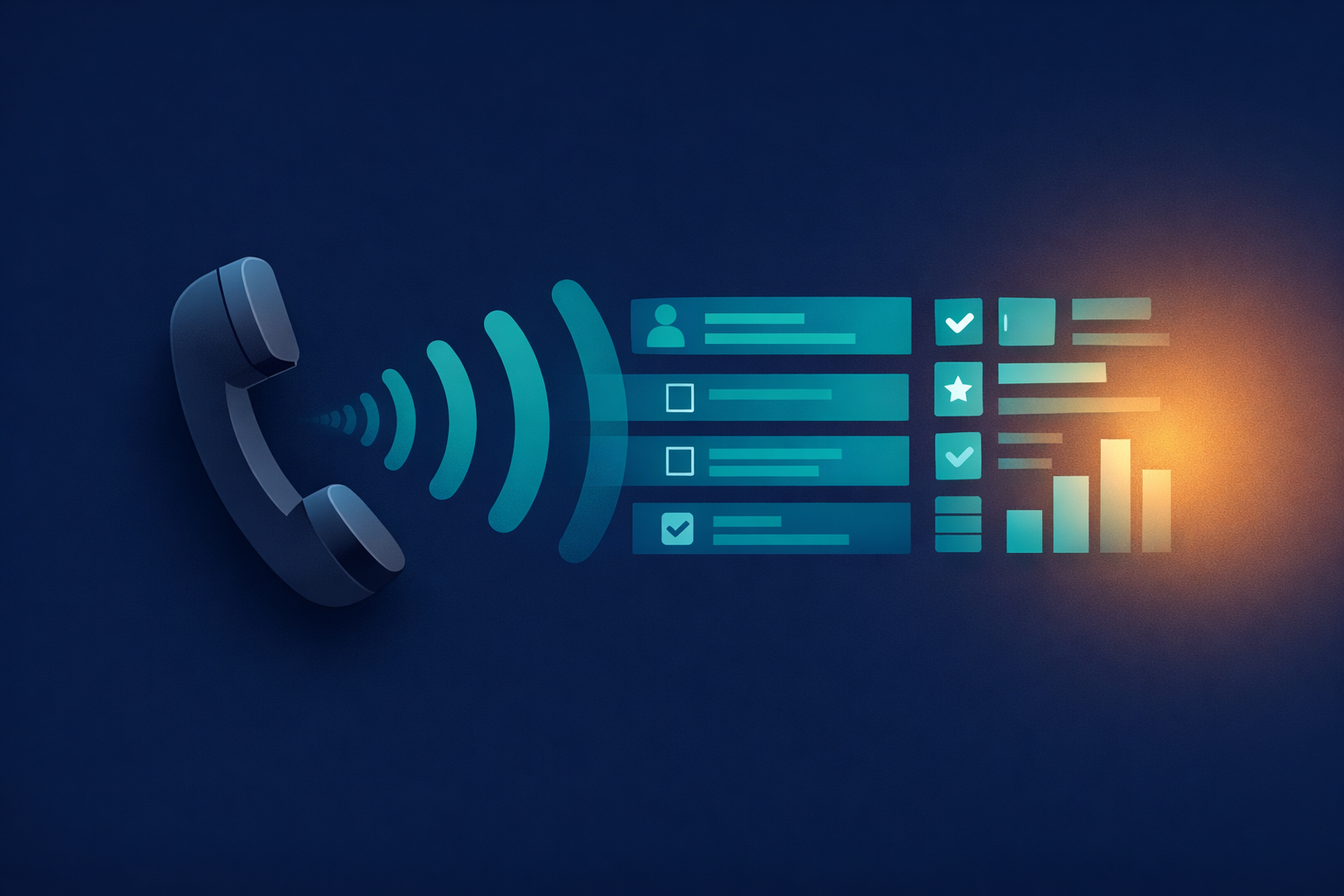
So I partnered with an engineer who understood voice AI, and we built it. A rep calls a number, talks through what happened, and the conversation becomes structured CRM fields. A few decisions mattered from day one:
- A phone call, not an app. No download, no login, no new behavior. If you can make a call, you can use June.
- Any phone, anywhere. Cell, landline, no internet needed on the rep's end. That matters in rural territory, on a job site, or anywhere the signal is thin.
- She asks the follow-up questions. If the rep mentions a budget but no number, June asks. If they name a stakeholder but not their role, June asks. The goal is complete data, not just recorded audio. These are the questions a sharp manager would ask on a ride-along.
- It lands in the CRM, configured to you. Not a dashboard to check later. Straight into your system, mapped to your fields, stages, and methodology. HubSpot is the native integration, and June is built to be CRM-agnostic, so we configure her to your setup during onboarding.
The first time I watched a call turn into clean, structured, detailed CRM data, better than what gets typed at a kitchen table at night, I knew it was real.
What I Think About Now
I still believe in sales methodology. SPIN works. Challenger works. Reps who actually run consultative discovery outperform the ones who wing it. None of that changed.
But methodology without capture is theater. If the insight from a great discovery call never reaches the system, it never shapes the forecast, never informs the next coaching conversation, and never transfers when the rep moves on and someone inherits the account.
The irony is that I spent years trying to fix the output, sales performance, when the real bottleneck was the input, data capture. Better inputs, better outputs. Obvious in hindsight. It always is.
Where We Are Now
June is live. You can call her yourself right now on the demo line and hear exactly what a rep would hear. She runs the debrief, asks her questions, and texts you the structured notes when you hang up. It takes about three minutes.
I do not pretend one product fixes everything in field sales. It does not. You still need good coaching, good leadership, and reps who care about the craft. But you also need the data, and the data has to be real. Not reconstructed at 7pm from a fading memory. Not batch-typed on Friday from a week of stacked meetings. Real, accurate, captured in the moment the rep still knows exactly what happened.
That is what I built. If you manage a field team and any of this sounds familiar, I would like to talk.
Call the demo line yourself at (949) 731-5466. About three minutes, and June texts you your own notes. Or grab time on my calendar at calljune.ai and we will just talk about whether this fits your world. No pitch.