
By Shawn Johnson. Published 2026-10-08.
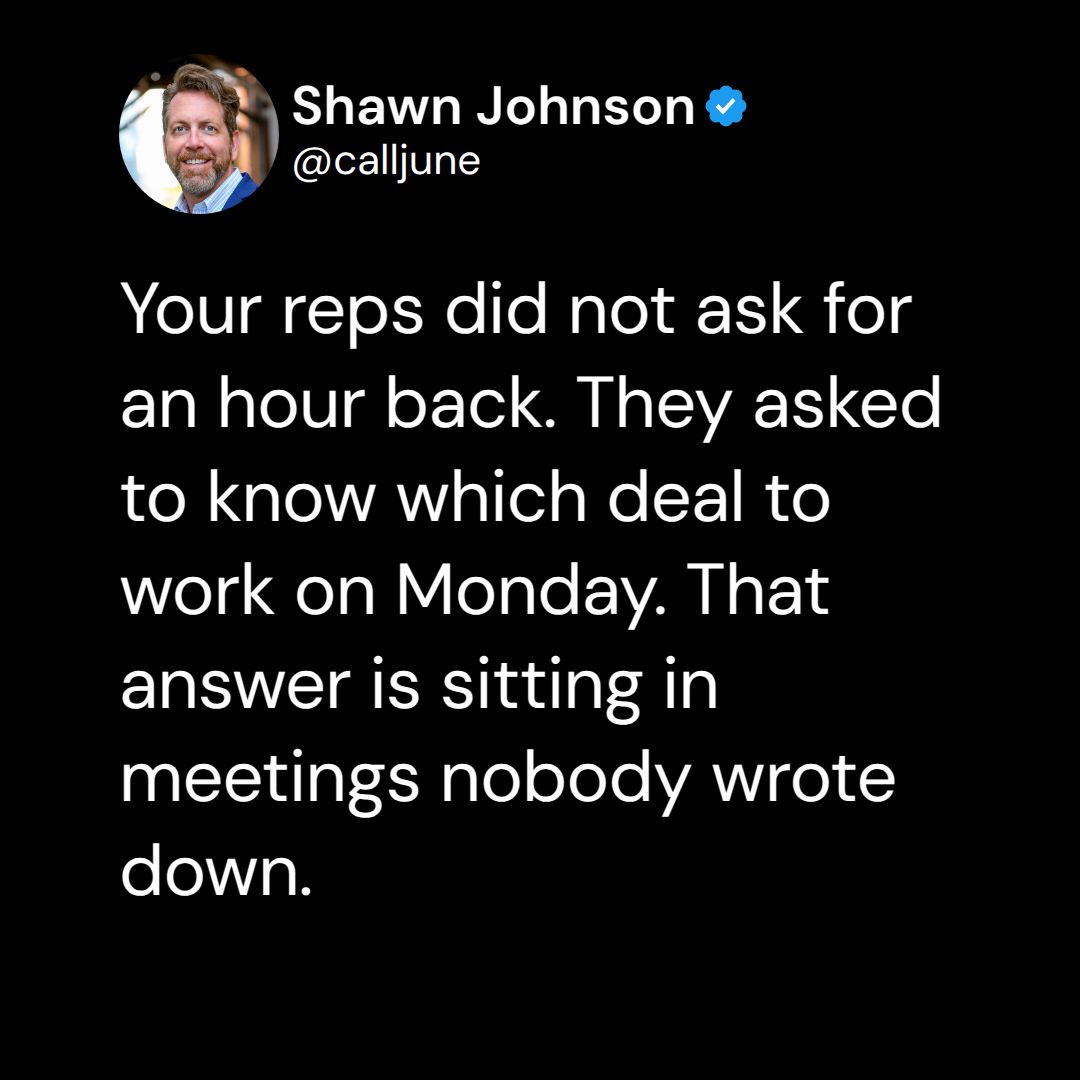
The short answer. Sales reps want clarity more than they want hours back. Pipedrive surveyed 1,000 working professionals in July 2026. 18.9 percent said knowing which deals and tasks to prioritize each day would most improve their results. Less time on post-call administration came second, at 14.3 percent. A rep can only pick his next move if he knows how his last meetings went. On a field team, that record is the one that goes missing. Call to CRM fills it by phone. The rep calls a number after a meeting. June asks the team's own questions. The call runs three to five minutes. Structured notes land in the CRM the company already runs.
What do sales reps say would improve their results most?
Reps say knowing which deals and tasks to prioritize each day.
Pipedrive asked 1,000 employed adults in customer-facing roles one question. What single change would most improve your results? That answer came first, at 18.9 percent. Spending less time on post-call administration came second, at 14.3 percent. Reducing tool switching came third, at 14 percent.
A rep reading that ranking will recognize himself in it. The gap between first and second is only four points. It is still the whole story.
These are not comfortable people. Nearly 58 percent give up three or more hours a week to admin work. That work pulls them away from customers. More than half, 55.4 percent, call that side of the job frustrating. They know the admin problem is real. They put a different one above it.
One caveat worth stating plainly. Pipedrive surveyed working professionals in customer-facing roles, not field sales reps. The ranking is theirs. The field sales argument below is ours.
Why would a rep rank clarity ahead of time saved?
Because he spends his week guessing.
Nearly 68 percent of the people surveyed feel unsure what to prioritize. That happens at least a few times a week. Almost a quarter, 24.6 percent, feel that way more than once a day.
Picture a rep on Monday morning with eleven open deals. He has no read on which one is moving. An hour back does not fix his Monday. Knowing how his last eight meetings went does.
Time saved is a real benefit, and he will take it. He asked for something else first.
Why is this harder for a field sales team?
A rep's most important meetings leave nothing behind.
An inside rep works inside systems. His calls log themselves. His emails sit in a thread. His booked meetings leave a record. His CRM collects all of it without asking him for anything. That works well, and most CRMs do it today.
A field rep drives to a plant. He sits with four people for forty minutes. He hears the one thing that will decide the deal. Then he drives home.
Nothing in that day arrives as data. There is no system on the other side of a handshake. An integration has nothing to read. So the most valuable meeting in the pipeline sits in one rep's head. It stays there until he finds a spare hour at the end of a long day. That hour is the part that quietly does not happen.
How does a manager build a priority list without that record?
A manager builds it out of stage fields and gut feel.
Managers are not the problem here. Stage fields and gut feel are the only material they have. A frontline field manager runs 12 to 15 reps. He cannot ride along with all of them.
So the rep gets a list built from fields he half-filled three weeks ago. He does not believe it. He goes back to picking the deal with the biggest number on it.
The industry is working the same problem from the other end. Salesforce surveyed 4,050 sales professionals. 51 percent of leaders using AI say disconnected systems are slowing those efforts. Another 74 percent of sales professionals are focused on cleaning data. Everyone can see the record is thin. Fewer people ask where the field half of it was supposed to come from.
How do you give a field team clarity without adding another tool?
Capture the meeting through the phone the rep already carries.
The rep calls June from the lot. She asks the team's own qualification and risk questions. They come in the order the company chose. The conversation runs three to five minutes. Structured notes land in the CRM the company already runs. That can be HubSpot, Salesforce or a shared sheet.
No app. No login. No typing. June is never in the customer's meeting. Nothing in that room is recorded.
Monday then gets built out of what the reps actually saw. The hours come back as a side effect.
FAQ
What do sales reps say would improve their results most?
Knowing which deals and tasks to prioritize each day. In Pipedrive's July 2026 survey it came first, at 18.9 percent. Spending less time on post-call administration came second, at 14.3 percent.
Is saving admin time the best way to improve sales productivity?
It helps, and the pain is real. Nearly 58 percent lose three or more hours a week to admin. But the people doing the work ranked clarity higher. Clarity depends on a record of what happened in the last round of meetings.
Why do field sales managers struggle to know which deals to prioritize?
Because the meetings that move field deals happen in person. They leave no digital trail. An inside call and an email both log themselves. A plant visit leaves whatever the rep remembers by Friday.
How do you capture a field meeting without manual data entry?
With a short guided debrief by phone right after the visit. The rep calls a number and answers the team's own questions. It takes three to five minutes. The conversation becomes structured CRM fields. No new app and no login.
Sources and disclosure
Pipedrive, Clarity, not automation, is becoming sales teams' biggest productivity advantage, July 8, 2026. Survey of 1,000 employed adults, administered through Pollfish. Verified live 2026-10-07.
Salesforce asked 4,050 sales professionals across 22 countries how their week goes. See State of Sales 2026. Fielded August through September 2025. Verified live 2026-10-07.
CallJune has one signed design-partner pilot and no published customer outcome data. Every claim above about better priority lists describes how the product works. None of it is a measured result.
Call audio and transcripts are retained in the voice platform. Immediate deletion after processing is a configurable setting. It can be enabled for you before go-live on request.