
TL;DR. Qualification works only when the questions get asked while the answers still exist. On a field team they get asked days later, in a pipeline review, so the rep reconstructs and the manager coaches a summary. Keep the questions you already trained on. Move them to the moment right after the meeting. That is what Call-to-CRM does. The rep calls a number from the truck, answers your questions in a short guided debrief, and the structured result lands in your CRM.
Why don't our qualification questions stick in the field?
Picture a Tuesday deal board. A branch manager asks his field rep what the buyer said about budget. That meeting happened eight days ago, in a distributor's back office two hours up the highway. The rep has been to eleven places since.
He answers. He is not lying. He is rebuilding.
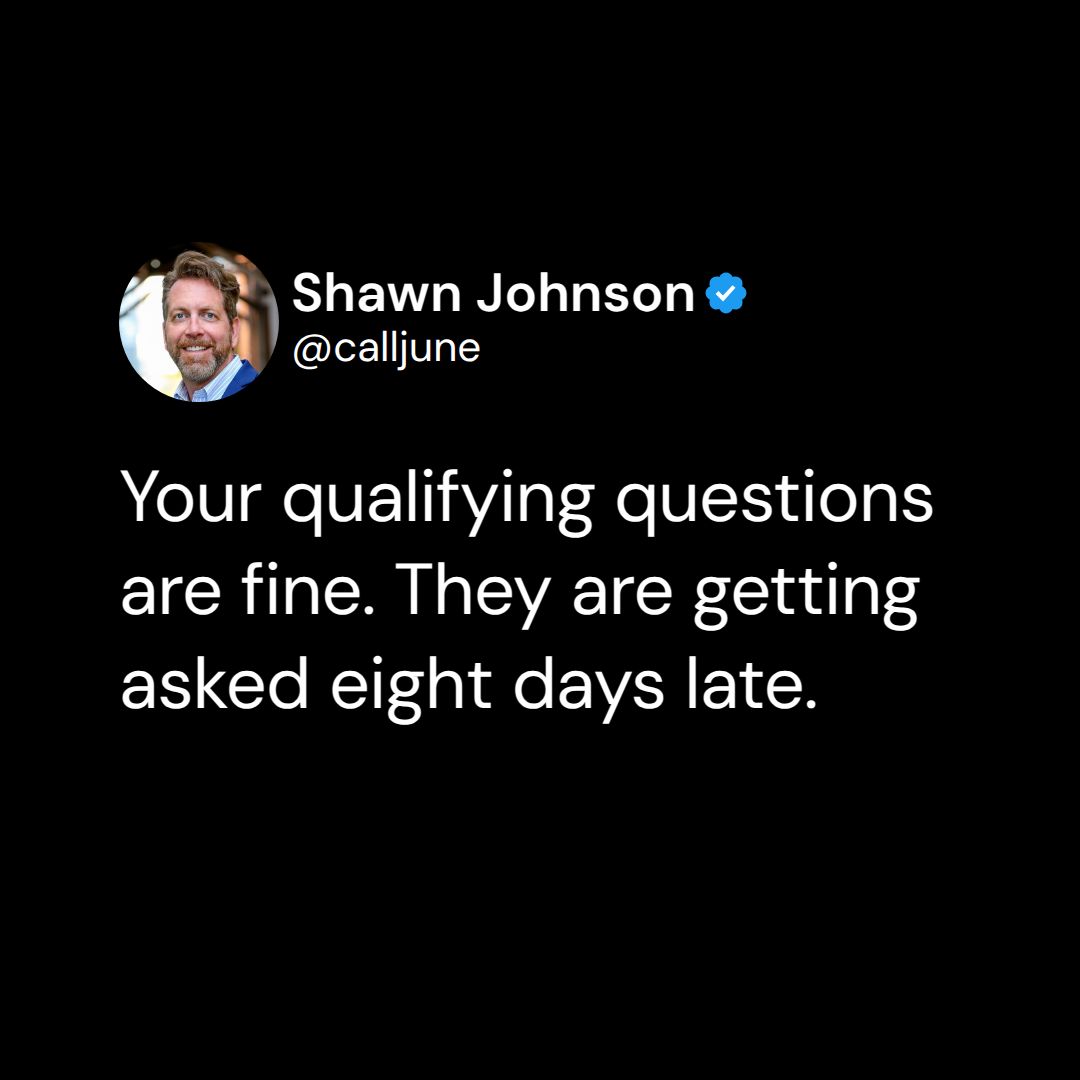
The manager asked a good question. It came off the process the company paid to train everyone on. MEDDIC, SPIN, BANT, a homegrown stage gate, the label does not change what happened. The question was fine. It was asked eight days late.
Inside sales does not have this problem in the same way. A screen leaves something behind. A field meeting leaves one rep's memory, and that memory starts decaying on the drive out of the lot.
When should qualification questions be asked?
On the day of the meeting. Ideally within the hour.
Most teams treat the pipeline review as the place qualification happens. It is not. By then the rep is narrating, and a narration is smoother and less useful than an answer. Look at what goes first. The new name in the room. The vague answer about timing. The competitor's brochure on the table. Those are the details that decide the deal.
There is a second cost, and managers feel it every week. The first third of a field pipeline review gets spent establishing what happened. That is intake, not coaching. Coaching starts after it.
How do I make MEDDIC or SPIN stick with a field sales team?
Change the timing, not the questions.
- Keep what you already trained on. Rewriting it is the most expensive move available and it fixes nothing. The questions were never the weak link.
- Pick the five or six that actually decide a deal in your business. Not the full form. The ones a sharp manager would ask on a ride-along.
- Get them asked on the day. Every meeting, every rep. This is the hard part, and it is the whole game. A manager can do it for two reps. Nobody does it for fourteen.
- Put the answers where you already coach and forecast from. A record that does not land in the CRM is just another place to look.
Step three is where good intentions die. A frontline manager runs 12 to 15 reps. Do the arithmetic on his week and there is no way he reaches each of them on the day of every field visit.
How does a guided debrief solve it?
The rep calls June from the parking lot before he pulls out, or from the truck on the drive back. She asks your questions, in your words. He talks it through for a few minutes, the way he would debrief a manager on the ride home. No app, no login, no typing, and nothing recorded in the customer's room.
When the call ends, the structured answers get written to your CRM. If you do not run one yet, they go to a shared sheet.
Two things are worth being precise about. CallJune configures the question set during onboarding. Reps answer your qualification, not a generic script and not one they picked themselves. And June never joins the customer meeting, so the buyer is never recorded. The rep is never asked to trade a relationship for a report.
Your own questions are already the prompt. They just needed something reliable to ask them.
What this does for the manager
The pipeline review changes shape. The manager walks in already knowing what happened. It was written down on the day, by the person who was there. The session starts at the coaching.
There is a second-order effect that shows up after a few weeks. A rep who gets asked the same five questions after every meeting starts hearing them during the meeting. That is the part a capture tool never gives you.
FAQ
The questions sales leaders ask us most.
Why don't our qualification questions stick in the field?
Because they get asked days after the meeting, usually in a pipeline review. By then the rep can only reconstruct. The questions are not the problem. The timing is.
Do we need to rewrite our questions?
No. Use the ones you already trained on. Change when they get asked.
When should qualification questions be asked?
On the day of the meeting, while the rep can still answer them accurately. Within the hour is better than end of day. End of day is far better than Tuesday.
Who decides the questions?
You do. CallJune configures your question set during onboarding, so reps answer your qualification rather than a generic script. Reps do not edit or self-select their own questions.
How long does the debrief take?
A few minutes, typically three to five. An intake-heavy question set runs longer.
Does the customer get recorded?
No. June is never in the customer meeting. The debrief happens afterward, between the rep and June.
On the span figure: workforce studies from Gallup and McKinsey put the average frontline manager somewhere between 12 and 15 direct reports. That is the number to picture when you ask whether one manager can reach every rep on the day.