

The short answer. A manager trims a rep's number because the number arrives with no reasons attached. Experience has taught him that unexplained numbers run high. The trim is a careful person's move, not an insult. The fix is to send the reasoning along with the number. With Call to CRM the rep calls June after the visit. She asks the team's own qualifying questions in a guided debrief, typically three to five minutes. His read of the deal lands in the CRM the same day.
Why do sales managers adjust their reps' forecasts?
Because a number arrives alone.
A rep sends a date and an amount. What he does not send is the part that would let his manager judge it. Who else is bidding. What the plant manager actually said on Tuesday. Whether the person pushing it inside the account can sign.
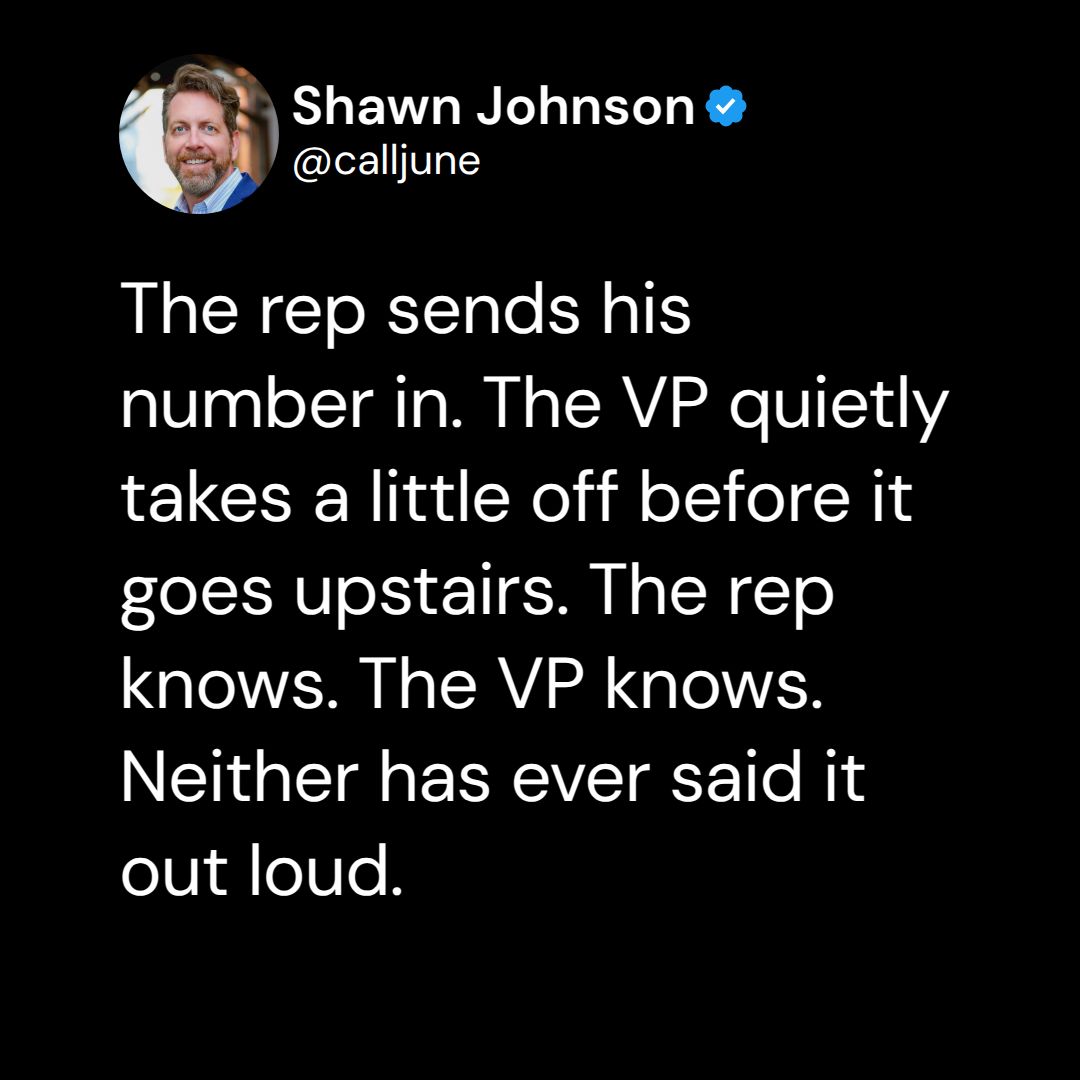
The manager has been burned by numbers like that before. So he takes a little off before it goes upstairs.
The rep usually knows. The manager knows. On most teams neither has ever said it out loud.
The cost is not the trim itself. The rep who is right gets the same cut as the one who is hoping. Nothing in the record tells them apart. The honest rep gets cut anyway. He pads the next number a little. That teaches the manager to cut harder. Both men are being reasonable, and the number gets less true every round.
Do sales leaders trust their team's forecast?
Mostly not, and they do not fully trust their own either.
Gong surveyed 928 sales and revenue professionals in 2022. Just 24% of leaders said they trust the forecast commitment from their sales reps. Only 58% trust their own (Gong press release, July 19, 2022). It is an older, vendor-run survey of mixed respondents, so read it as direction rather than measurement.
The second number is the one worth sitting with. The people who carry the forecast to the CEO do not fully believe it when it leaves their own mouths. Character is not the issue. The material behind the number never reached the record.
Outreach described the two ends of this in August 2026. Sandbagging and late-surfacing deals distort the same forecast from opposite directions. Both are rational responses to how comp plans and quota pressure are designed (Outreach, August 24, 2026). The padding and the trim are the same conversation, held by two people who never had it out loud.
How do you make a rep's forecast number more believable?
Attach the reason, and collect it the day of the visit.
Most teams reach for a better spreadsheet here, or one more required field, or a Friday reminder. None of those produce a reason. They produce a number typed in later, by a more tired version of the same rep.
A reason only travels if somebody collects it while it is still in his head. That is the recall window, and it closes fast. A rep who toured a plant on Tuesday has the whole read walking back to the truck. The competitor who has been there twice. The quiet engineer at the end of the table. The reason the date is April and not March. By Friday he has the date and not much else.
With Call to CRM he calls June from the lot. The call is rep-initiated. There is no app, no login and no typing, and the guided debrief typically runs three to five minutes. She asks the team's own intelligent qualifying questions, the ones a good manager asks on a ride-along. She confirms before anything is written. Structured notes land in the CRM the company already uses.
Now the manager has something to read behind the number. He can trim the deal that warrants it and leave the one that does not. The trim gets smaller because it gets aimed.
FAQ
Why do managers cut their reps' forecasts?
Because the number arrives without its reasons. Experience has taught them to discount it.
Do sales leaders trust their team's forecast?
Mostly not. In a 2022 Gong survey, 24% of leaders trusted their reps' forecast commitment and 58% trusted their own. The survey covered 928 sales and revenue professionals.
How do you make a rep's number more believable?
Send the reasoning with it. Capture it the day of the visit, in the rep's own words.
Who starts the call to June?
The rep does. He calls from his registered phone when the moment suits him. June is never in the customer meeting and records nothing there.
Sources: Gong, "Only 24% of Sales Leaders Are Confident In Their Team's Revenue Forecast," July 19, 2022. Outreach, "Sandbagging vs. late-surfacing," August 24, 2026. Both re-verified live 2026-10-26.